
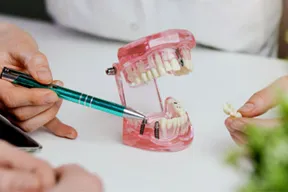
How Dental Implants Improve Jawbone Health
Dental implants improve jawbone health by restoring the chewing stimulation your bone needs to maintain its density and shape. That's something a missing tooth, and even traditional bridges or dentures, cannot do. When a tooth root is gone, the jawbone beneath it stops receiving the pressure signals that tell your body to maintain that bone, and resorption begins almost immediately. An implant's titanium post replaces the root itself, fusing directly with the bone and giving it a reason to stay strong.
Key Takeaways
- Losing a tooth removes the stimulation your jawbone needs, and bone loss can begin within months
- Peer-reviewed studies of tooth extraction sites show the alveolar ridge can lose roughly a third to two-thirds of its width within about six months if the tooth isn't replaced
- A classic 12-month study found ridge width can shrink by as much as half within the first year, with most of that loss happening in just the first three months
- Dental implants fuse with the jawbone through a process called osseointegration, restoring the stimulation lost teeth once provided
- Unlike bridges or dentures, implants are the only tooth-replacement option that actively preserves bone rather than resting on top of it
- Implants have long-term survival rates well above 90%, making them a durable, bone-protective solution
Why Losing a Tooth Puts Your Jawbone at Risk
Your jawbone stays dense and strong because of ongoing pressure from chewing, transmitted through tooth roots. When a tooth is lost, that pressure disappears, and the bone in the area no longer gets the signal to maintain itself. Cells called osteoclasts begin to break the bone down faster than new bone can be built, and the site starts to shrink.
This process happens faster than most patients expect. A widely cited 12-month clinical study found the alveolar ridge can lose up to half its width in the first year after extraction. Roughly two-thirds of that loss occurs in just the first three months (Schropp et al., International Journal of Periodontics & Restorative Dentistry). A separate systematic review of post-extraction bone changes found horizontal bone loss of 29% to 63%, and vertical bone loss of 11% to 22%, within six months of extraction (Tan et al., Clinical Oral Implants Research). After that initial rapid phase, resorption continues at a slower pace for as long as the tooth remains unreplaced.
Long-term denture-wearer studies also show the two jaws don't resorb at the same rate: over years and decades, the lower jaw (mandible) tends to lose bone several times faster than the upper jaw (maxilla) (Tallgren, Journal of Prosthetic Dentistry).
What This Bone Loss Actually Looks Like Over Time
Jawbone resorption isn't just a dental statistic. It has visible, physical effects:
- Facial structure changes: As bone shrinks, the lower face can appear to collapse inward, changing your profile and adding to the appearance of premature aging
- Shifting teeth: Neighboring teeth can drift into the empty space, throwing off your bite
- Difficulty with future replacement: The more bone you lose, the harder and more involved it becomes to place an implant later, sometimes requiring bone grafting first
- Denture instability: Patients with dentures often notice their fit becoming looser over the years. That's the underlying bone shrinking beneath the appliance
How Dental Implants Interrupt This Process
A dental implant works differently from any other tooth-replacement option because it replaces the root, not just the visible tooth. The titanium post is placed directly into the jawbone, where it undergoes osseointegration, a process in which bone cells grow directly onto the implant's surface and form a direct chemical bond with the titanium. This typically takes three to six months to fully stabilize.
Once integrated, the implant transmits chewing forces down into the jawbone almost the same way a natural tooth root did. That gives your body the signal to keep maintaining that bone rather than resorbing it. This is the core reason implants are considered the gold standard for long-term jawbone preservation. No other replacement option provides that continued stimulation.
Implants also have a strong long-term track record. A systematic review with an average follow-up of over 13 years found cumulative survival rates of 94.6% for implants placed with simultaneous bone preservation techniques. Most patients experience only minor, gradual bone changes around the implant site afterward, rather than the progressive loss seen with an unreplaced tooth.
Comparing Your Tooth-Replacement Options
| Option | Effect on Jawbone | Long-Term Considerations |
|---|---|---|
| Dental implant | Stimulates bone through chewing forces; helps preserve density | Requires adequate initial bone, but actively maintains it afterward |
| Fixed bridge | Rests on adjacent teeth; no stimulation to the bone below the gap | Underlying bone continues to resorb over time |
| Removable denture | Sits on top of the gum; provides no stimulation to bone | Bone loss can loosen fit over the years, requiring adjustments |
| No replacement | No stimulation at all | Fastest and most significant bone loss over time |
Is a Dental Implant Right for You?
Most adults with sufficient jawbone density and good general oral health are good candidates for dental implants. If you've experienced some bone loss already, that doesn't automatically rule you out. Depending on your situation, bone grafting or specialized implant placement techniques may still make implants possible. The best way to know for certain is a consultation and imaging review with your dentist.
If you're also dealing with gum health concerns, it's worth addressing periodontal disease as part of the same conversation. Healthy gums and adequate bone go hand in hand for implant success.
Protecting Your Jawbone at Jorgensen Advanced Dental Center
At Jorgensen Advanced Dental Center, serving patients in Palm Springs and Indian Wells, Dr. Jay Jorgensen evaluates each patient's bone structure carefully before recommending a treatment path. Whether you lost a tooth recently or have been living with a gap for years, it's worth finding out what your options look like now. The sooner an implant is placed, the more of your natural bone structure can typically be preserved. Contact us to schedule a consultation.
Frequently Asked Questions
How quickly does jawbone loss start after losing a tooth?
Jawbone resorption can begin within months of tooth loss. Clinical studies show the alveolar ridge can lose up to half its width within the first year, with much of that loss happening in just the first three months if the tooth is never replaced.
Do bridges or dentures protect the jawbone the way implants do?
No. Bridges rest on neighboring teeth and dentures sit on top of the gum: neither transmits chewing pressure down into the jawbone. Only a dental implant replaces the tooth root itself, restoring the stimulation your bone needs to maintain its density over time.
What if I've already lost a significant amount of jawbone?
You may still be a candidate for implants. Techniques like bone grafting can rebuild adequate bone volume in many cases, and your dentist can evaluate your specific anatomy with imaging to determine the best path forward for your situation.
How long do dental implants typically last?
Dental implants have strong long-term outcomes, with studies showing survival rates above 94% at 13-plus years of follow-up when combined with proper bone preservation techniques. With good oral hygiene and regular checkups, many implants last for decades.