
Comprehensive Cosmetic Dentistry
Reviewed by Dr. Jay Jorgensen, DDS
practicing in Palm Springs and Indian Wells since 1995.

Over 20 years placing veneers and designing smiles in Palm Springs, the question I hear most often is: "Will it look natural?" Every cosmetic consultation begins with a review of oral health, bite, anatomy, and the changes the patient hopes to make. Whether you're considering porcelain veneers, ClearCorrect aligners, bonding, or a broader smile plan, treatment is tailored to your clinical needs and aesthetic goals. — Dr. Jay Jorgensen, DDS, UCLA School of Dentistry
Our Cosmetic Services
Our staff has a wealth of experience offering a wide array of dental services. He takes the time to listen to your concerns and identify your requirements, ensuring you receive customized cosmetic dental care that meets your needs. If you're searching for comprehensive cosmetic dentistry in Palm Springs, our team is here to assist you. We're ready to guide you through all your choices.
With a commitment to compassionate, high-quality care, our aim is to provide you with excellent oral health and a beautiful, functional smile. We acknowledge that each individual's needs are unique, and we take the time to discuss your cosmetic treatment options. At Jay Jorgensen, DDS, our team employs cutting-edge smile design technology to show you how your new smile will appear before any cosmetic procedures are performed. Our Palm Springs cosmetic dentist ensures that you have all the information needed to make an informed decision.
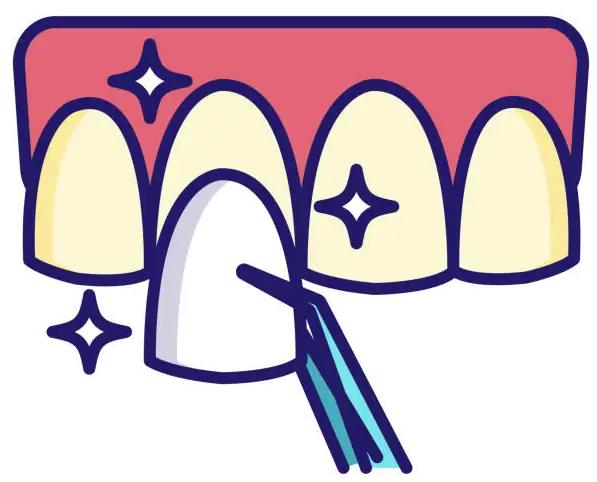
Porcelain Veneers for a Stunning Smile
Among the most popular options in cosmetic dentistry are porcelain veneers. Versatile and durable, they can help reshape your teeth to correct imperfections and enhance your smile's attractiveness. In addition to porcelain veneers, we also offer composite veneers to suit your preferences. Our team is dedicated to ensuring your satisfaction with the results.
Don't let concerns about a complicated process dissuade you from getting porcelain or composite veneers. For many individuals, veneers only require two office visits. During your initial appointment, your teeth will be gently buffed and shaped for a proper fit. We'll take impressions and send them to our trusted lab for fabrication. On your next visit, we'll carefully clean your teeth and securely bond the veneers in place.
How Long Do Porcelain Veneers Last?
Porcelain veneers typically last 10–20 years with proper care. In my experience, the patients who reach the 20-year mark are those who avoid hard habits — ice-chewing, nail-biting, using teeth as tools — and maintain regular cleanings. We use high-quality ceramic materials and precision bonding techniques to maximize longevity, and all veneer cases include a bite analysis to ensure the porcelain isn't carrying undue stress.
Veneers vs. Dental Bonding: What's the Difference?
Porcelain veneers are custom-fabricated ceramic shells bonded to the front of the tooth — highly stain-resistant, lasting 10–20 years, and requiring two visits for lab fabrication. Composite bonding is applied directly to the tooth in a single visit and typically lasts 5–10 years at a lower cost. Veneers are the right choice for a comprehensive smile redesign; bonding is ideal for repairing a single chip or small gap. We'll discuss which fits your goals and budget at your consultation.
Our Cosmetic Procedures
 Dental Bonding
Cosmetic Bonding: Enhancing Your Smile
Cosmetic bonding is a procedure that lets your dentist use composite resin to reshape or repair your smile. This approach is great if you're self-conscious about your smile or seeking a cost-effective alternative to more invasive options like orthodontics or veneers. With bonding, it's easy and affordable to fix chipped or uneven teeth, boosting your self-assurance. Plus, bonding is often done in just one visit and doesn't require anesthesia!
Like many cosmetic procedures, bonding will naturally wear down and lose color over time, eventually needing replacement. Nevertheless, bonding is quite sturdy and generally lasts for years.
Reasons for choosing cosmetic bonding:
- Closing gaps between teeth
- Repairing chipped teeth
- Treating decayed teeth with cavities
- Lengthening uneven teeth
- Shielding roots exposed by receding gums
- Restoring heavily discolored teeth
- What's involved in dental bonding?
The process starts by isolating the teeth involved in the procedure and preparing them for bonding. After applying a conditioning liquid, the tooth surface develops small grooves, helping the tooth securely adhere to the bonding agent.
Next, a bonding resin is applied to lock the composite in place. Layers of tooth-colored composite are added, and then the composite and bonding resin are shaped and hardened using a special light. Once the composite fully sets, the bonded areas are smoothed, buffed, and polished to seamlessly blend with the surrounding teeth.
If you're seeking to restore confidence in your smile, reach out to our practice to learn more about cosmetic bonding.
 Dental Bridges
Fixed Dental Bridges: Restoring Missing Teeth
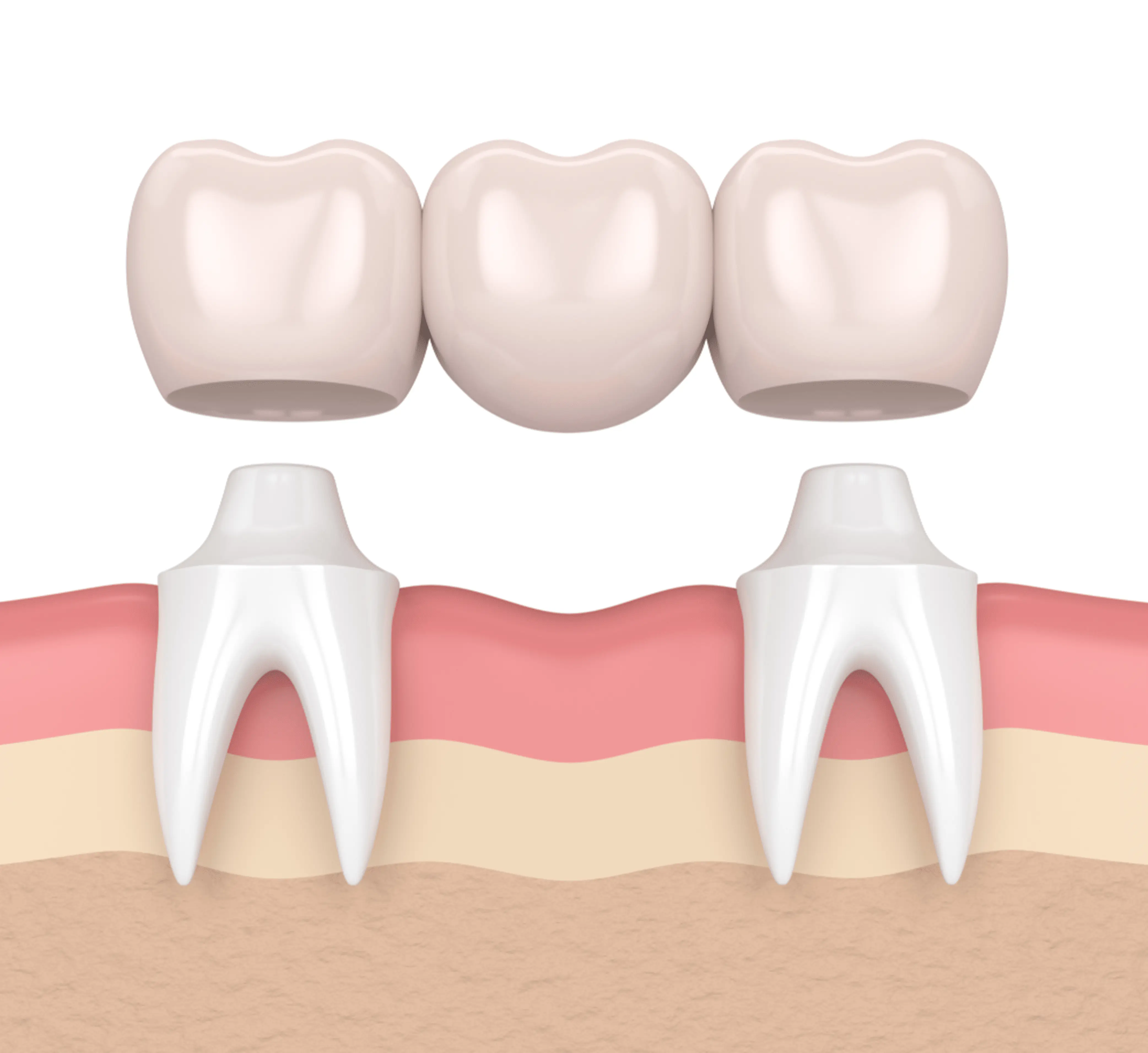
A dental bridge serves as a fixed, non-removable device that offers an effective solution for replacing lost teeth.
Various bridge types exist, and your dentist will help you determine the best option for your situation. The "traditional bridge" is commonly used, typically made with porcelain fused to metal. This bridge includes two crowns covering anchoring teeth (abutment teeth) and attached pontics (fake teeth), effectively filling the gap left by one or more missing teeth.
Dental bridges are highly durable and can last many years. However, they might require replacement or re-cementing due to regular wear.
- Filling the gap left by missing teeth.
- Maintaining your facial shape.
- Preventing remaining teeth from shifting.
- Restoring your ability to chew and speak.
- Reviving your smile.
- Upgrading from removable partial dentures to a permanent dental appliance.
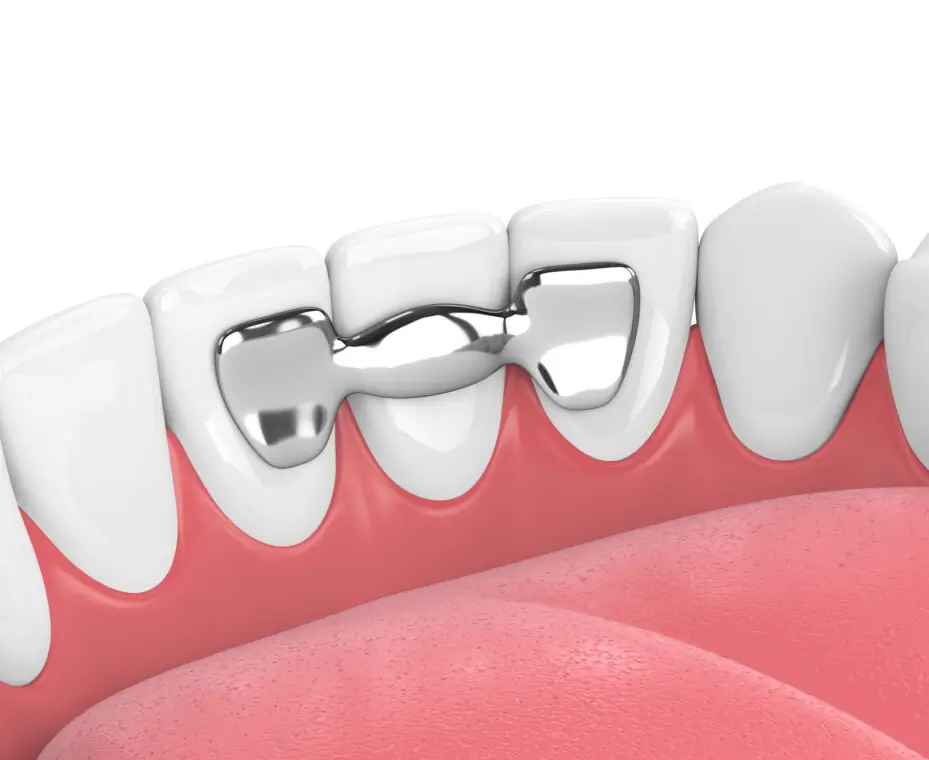
What's involved in getting a fixed bridge?
Getting a bridge generally involves two or more appointments. While your teeth are numb, your dentist will prepare the two anchoring teeth by removing a portion of enamel to make space for crowns. Afterward, a precise impression (mold) will be taken and sent to a dental lab, where the bridge will be crafted. Meanwhile, a temporary bridge will be created and worn until your next visit.
During your second appointment, your permanent bridge will be carefully assessed, adjusted, and cemented to ensure proper fitting. Occasionally, your dentist might temporarily cement the bridge to let your teeth and tissue adjust to the new bridge. The permanent cementation will take place later.
Following the procedure, you'll receive care instructions. Proper brushing, flossing, and regular dental check-ups will help maintain the longevity of your new, permanent bridge.
Looking for a treatment with its own detailed guide? Visit our pages for professional teeth whitening and dental crowns.
Dental Veneers
Porcelain Veneers: Transforming Your Smile
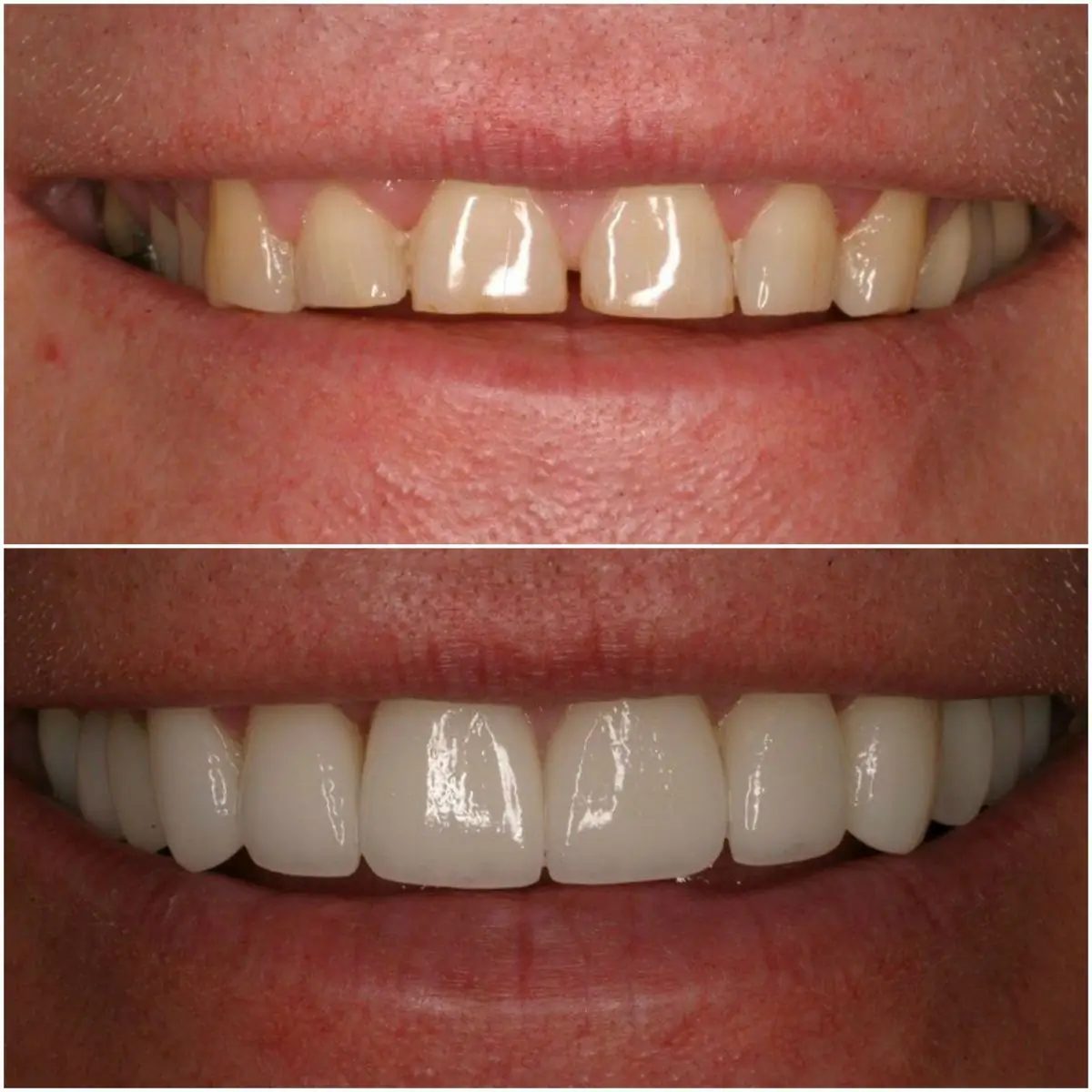
Veneers consist of thin, strong porcelain custom-made by a professional dental lab to match the shape and color of your teeth. These veneers are bonded to the front of your teeth, resulting in a captivating and appealing smile.
Veneers have the power to completely reshape your teeth and enhance your smile, often serving as an alternative to crowns and addressing various dental concerns.
While not permanent, veneers are highly durable and can last many years, ensuring a lasting, beautiful smile.
Why consider porcelain veneers?
- Cosmetic enhancement, achieving a uniform and white smile.
- Addressing crooked or misshapen teeth.
- Dealing with severe discoloration or staining.
- Reshaping teeth that are too small or large.
- Closing unwanted gaps or spaces.
- Repairing worn or chipped teeth.
What's involved in getting porcelain veneers?
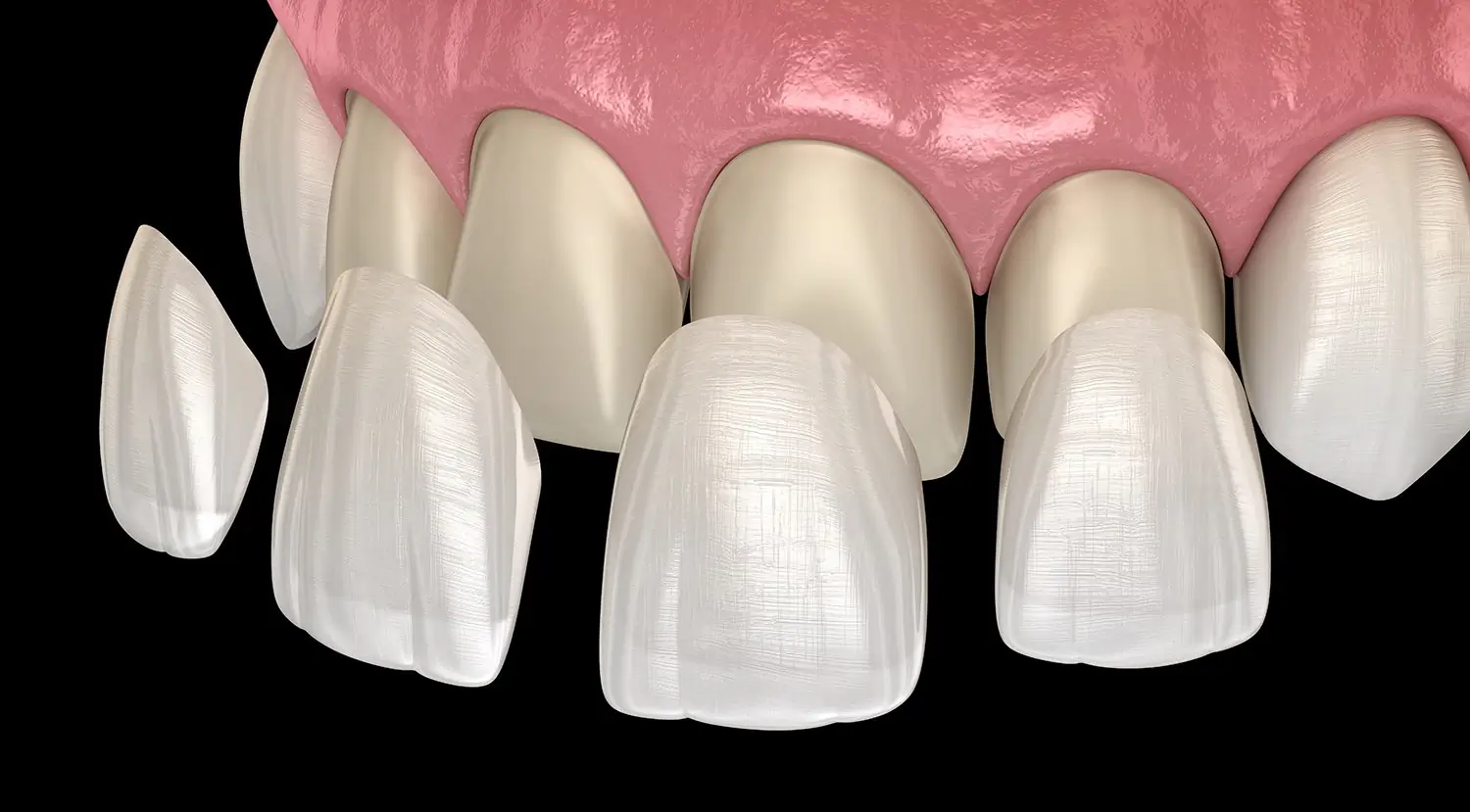
The veneer process typically involves two visits, with minimal or no anesthesia needed. In the first visit, the teeth's surfaces are gently buffed and shaped to accommodate the veneer's thickness. A mold or impression of your teeth is taken, and you'll choose a shade alongside the dentist.
During the second visit, the teeth are cleaned with special liquids to ensure a strong bond. Bonding cement is placed between the tooth and veneer, followed by using a specialized light to harden the bond.
Afterward, you'll receive care instructions for your veneers. Proper brushing, flossing, and regular dental check-ups will contribute to the longevity of your new veneers.
Medical disclaimer: This page provides general educational information and should not be confused for a diagnosis or treatment recommendation. Consult our office directly to speak with a qualified dental professional or make and appointment with the office for advice based on your individual health and clinical findings.