
Travel-Friendly Dental Hygiene Tips
Traveling doesn't have to mean putting your oral hygiene routine on hold. A few small adjustments to your packing and daily habits can keep your smile just as healthy on the road as it is at home. Between early flights, unfamiliar bathrooms, and packed itineraries, it's easy to let brushing and flossing slide. But since most adults already fall short of the American Dental Association's daily flossing recommendation even at home, travel is exactly the wrong time to lose more ground.
Key Takeaways
- Only about 31.6% of U.S. adults floss daily even under normal routines, so travel makes consistency even harder.
- A packable travel kit removes the "I forgot my toothbrush" excuse before it starts.
- Changes in cabin pressure during flights can worsen existing dental sensitivity or untreated decay.
- Sugary airport snacks and acidic drinks add up quickly on travel days.
- Setting phone reminders helps maintain your routine across time zones.
- A pre-trip dental check is a smart move before any extended vacation.
Pack a Dedicated Travel Dental Kit
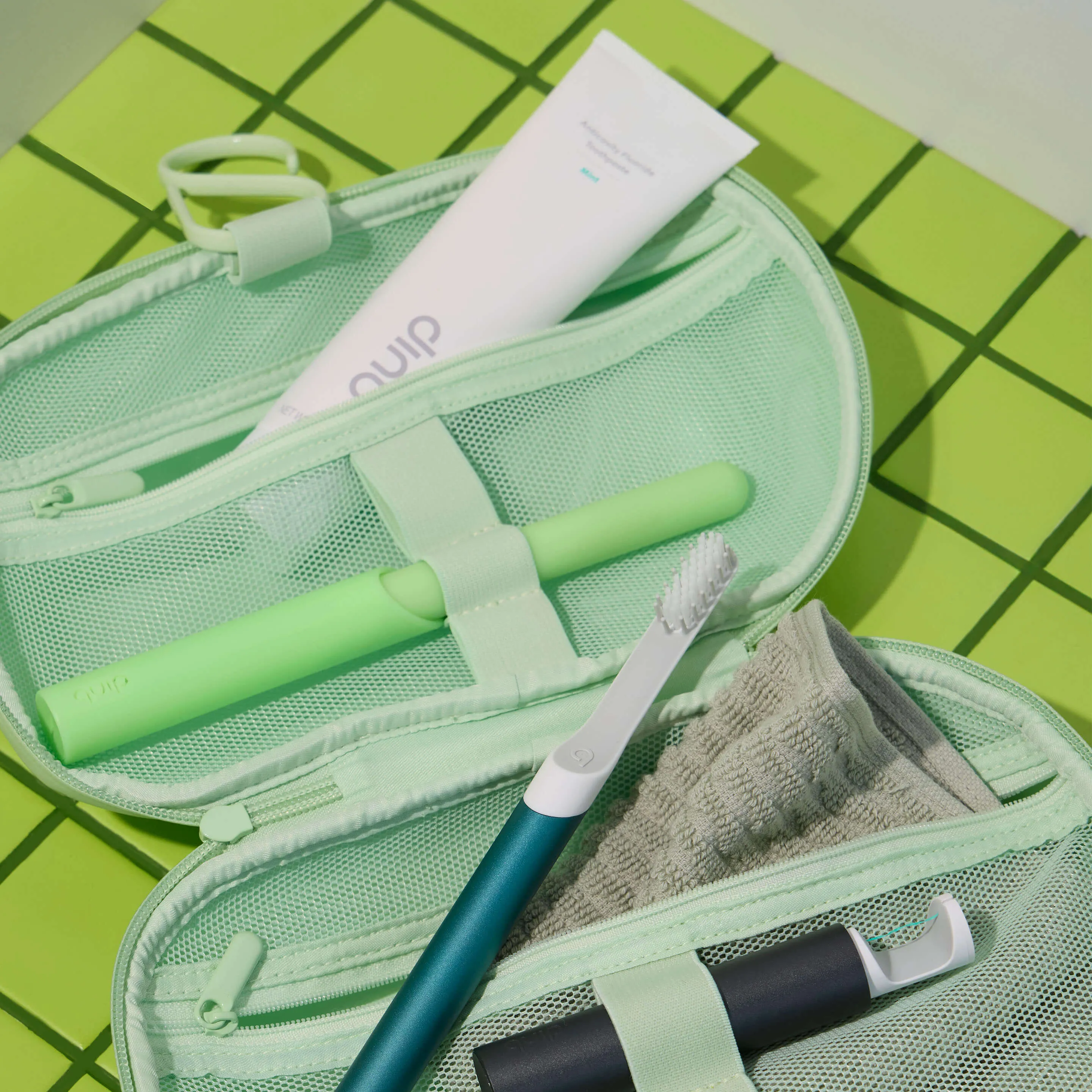
The single most effective travel hygiene habit is keeping a dedicated, always-packed dental kit so you're never relying on memory the morning of a trip. A simple pouch that lives in your suitcase or travel bag means one less thing to remember when you're rushing out the door.
Your travel kit should include:
- Travel-sized toothbrush with a protective cap
- Travel-sized toothpaste (check size limits for carry-on luggage)
- Floss picks or a small container of floss
- Travel-sized mouthwash (alcohol-free is gentler on sensitive gums)
- A small tube of fluoride gel if you have a history of sensitivity or decay
Keeping this kit permanently packed, rather than assembling it before each trip, means the ADA's recommended routine of brushing twice a day travels with you automatically.
Stick to Your Routine, Even Across Time Zones
Maintaining your regular brushing and flossing schedule, even when your days shift with time zones or long travel hours, prevents the small lapses that add up over a trip. It's easy to think "I'll double up tomorrow," but skipped days rarely get made up. Set a phone reminder tied to your destination's local time rather than your home time zone, so your routine adjusts along with your schedule instead of getting lost in the shuffle.
A simple way to stay on track:
- Brush within the first hour of waking, regardless of time zone.
- Floss once daily. Even a quick pass is better than skipping entirely.
- Rinse with water after airport or airplane snacks if you can't brush right away.
- Brush before bed, even after a long travel day.
Watch What You Eat and Drink on Travel Days
Travel days often mean more sugary snacks, acidic beverages, and sticky foods than your normal routine. All of that raises your risk of enamel erosion and cavities. Airport terminals are full of convenient but cavity-prone choices: pastries, sodas, dried fruit, and candy. None of these need to be off-limits, but a little awareness goes a long way.
| Travel Snack Habit | Smarter Swap |
|---|---|
| Sugary coffee drinks all day | Water or unsweetened coffee/tea between meals |
| Dried fruit and candy for snacks | Cheese, nuts, or fresh fruit |
| Soda on long flights | Water, since cabin air is also dehydrating |
| Sticky snacks between meals | Snacks you can rinse or brush away from soon after |
If you do indulge, rinsing with water afterward, even without a toothbrush handy, helps reduce the acid and sugar sitting on your teeth until you can brush properly.
Staying hydrated matters here too. Cabin air and long travel days are dehydrating, and reduced saliva flow means your mouth has less natural protection against the acids and sugars from travel snacks. Carrying a refillable water bottle through security and sipping throughout the day is a small habit that supports both your energy and your oral health at the same time.
Understand How Flying Affects Your Teeth
Changes in cabin pressure during flights can intensify existing dental sensitivity, particularly if you have an untreated cavity, a recent filling, or a cracked tooth. This phenomenon, known in dental and aviation medicine literature as barodontalgia or "tooth squeeze," happens because trapped air pockets in or around a compromised tooth expand as atmospheric pressure drops during ascent, pressing against sensitive nerve tissue (Barotrauma: Tooth under Pressure, PubMed). If you've ever felt a sharp twinge during takeoff or landing, it may be worth having that tooth checked before your next flight rather than after.
Schedule a Pre-Trip Check for Longer Vacations
If you're planning an extended trip, especially somewhere with limited access to dental care, it's worth having any known issues checked out beforehand. A small cavity or a filling that's starting to loosen is far easier to handle at home than in an unfamiliar city or another country. Language barriers and unfamiliar providers can complicate even a simple problem. Our team can do a quick pre-travel check and handle anything that might turn into an inconvenient surprise mid-trip.
This is especially worth considering before international travel, cruises, or any trip to a remote destination where dental care may be difficult to access quickly. Even a five- or ten-minute check can catch a weak filling, a cracked tooth, or early gum inflammation before it becomes a problem thousands of miles from home. It's a small step that can save an entire vacation from being derailed by a dental emergency.
We're Here Before and After Your Trip
Whether you need a quick pre-vacation check, want personalized tips based on your specific dental history, or you're due for your regular cleaning after a busy travel season, we're glad to help. Jorgensen Advanced Dental Center serves patients from our Palm Springs and Indian Wells offices, and we're always happy to fit in a pre-trip visit if something's been nagging at you before you go. Contact us to schedule an appointment, or explore our cleaning and prevention services to keep your smile in great shape year-round.
Frequently Asked Questions
Can I bring my regular toothpaste through airport security?
Toothpaste over 3.4 ounces (100ml) needs to go in checked luggage under the TSA's 3-1-1 liquids rule, so travel-sized tubes are the easiest option for carry-on bags (TSA, Liquids, Aerosols, and Gels Rule). Packing a dedicated travel-sized kit ahead of time avoids this issue entirely.
Does flying really affect my teeth?
Yes. Changes in cabin pressure can intensify sensitivity or discomfort in teeth that already have untreated decay, a loose filling, or a crack, a phenomenon known as barodontalgia. If you notice sharp pain during takeoff or landing, it's worth having that tooth evaluated before your next flight.
What if I forget to pack my toothbrush?
Most hotels and many airlines can provide a basic toothbrush and toothpaste on request, and convenience stores near most destinations carry travel-sized options. Keeping a spare kit in a carry-on or bag you always travel with helps you avoid the scramble altogether.
Is it okay to skip flossing for a few days while traveling?
Occasional lapses won't cause lasting harm, but since most adults already fall short of daily flossing even at home, travel is a good time to build the habit rather than let it slide further. A small floss pick kit makes it easy to keep up even on the go.